I'd rather build the thing than talk about building it.
I'm Ayush Sigdel — most people call me Ayuz. I'm based in Nepal, and I spend my time designing and building web products: client sites through Orivexa Agency, and original products like Janta Reports on my own time.
I got here through curiosity more than a plan — I'd rather open a project and figure it out by building than read about it indefinitely. That's still how I learn everything I use today.
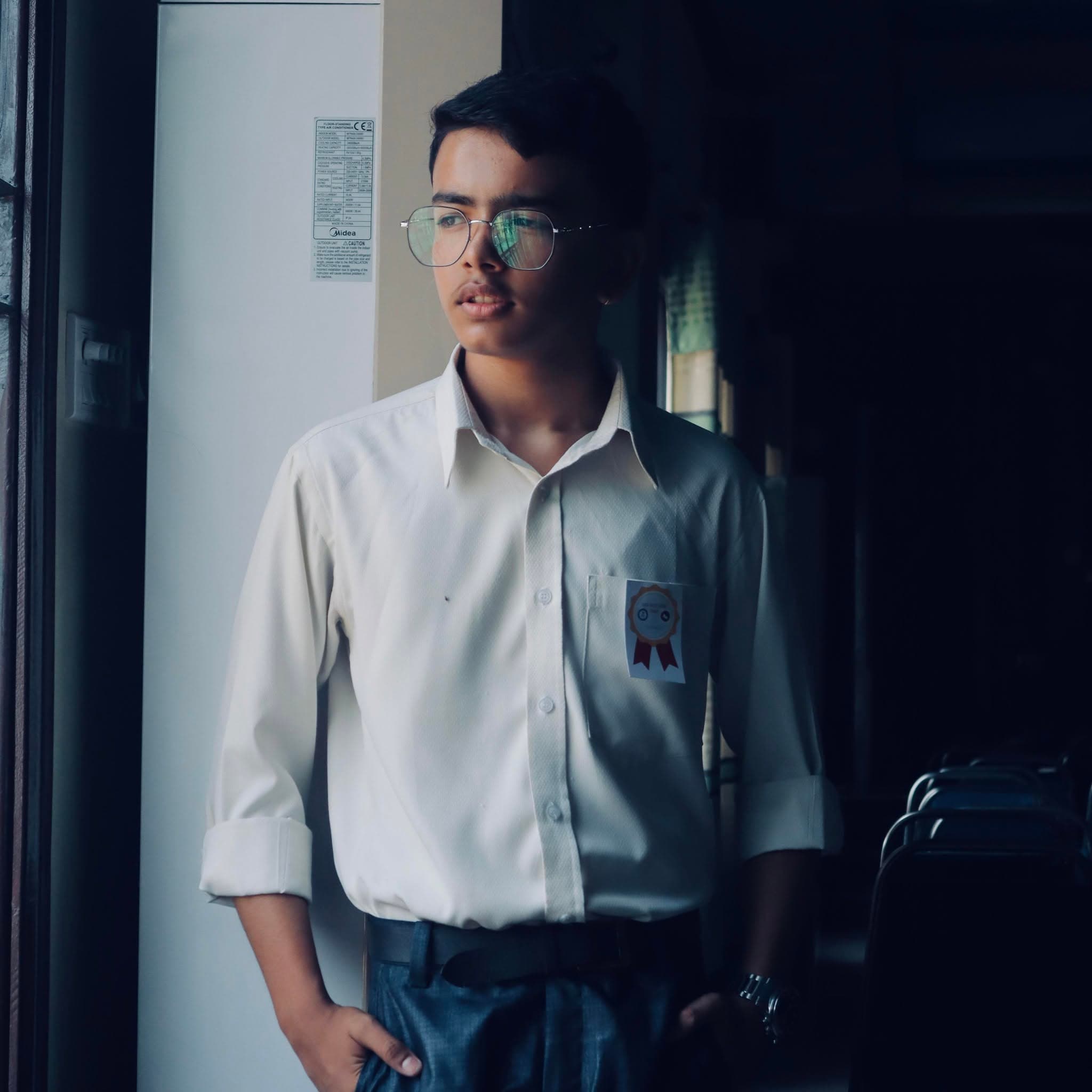
How this started, in order.
No detours removed for effect — this is roughly the actual sequence.
- 2025
Started learning web development
Picked up HTML, CSS, and JavaScript from scratch — no bootcamp, no mentor, just documentation, freeCodeCamp, and a lot of trial and error.
Built first real websites
Moved from exercises to actual builds: small business sites for real people, where the constraints — content, deadlines, a client who has to like it — were the real teacher.
Started freelancing
Began taking on client work directly. Bakeries, salons, cafés — ordinary businesses that needed a site that actually worked, not a template with their logo swapped in.
- April 4, 2025
Founded Orivexa Agency
Turned freelancing into something more deliberate — founded Orivexa Agency at age 15, a small studio built around the same standard I hold my own work to, instead of a one-off gig at a time.
Started creating real-world products
Moved beyond client briefs into building things I wanted to exist: tools, apps, and systems designed to solve a specific problem end to end.
Building Janta Reports
Currently building a civic reporting platform that gives citizens a direct, trackable way to report infrastructure problems to their municipality.
Growing through continuous learning
Still learning in public — new frameworks, better architecture, sharper design instincts. The goal isn't to arrive somewhere; it's to keep getting better at this.
A few things I actually believe about this work.
Not quotes off a wall — just the working assumptions behind most decisions I make.
Craftsmanship over speed
It's faster to ship something rough than something right. I'd rather spend the extra hour than ship the version I'd need to apologize for later.
Learning through building
I don't learn a technology and then use it — I use it because I need it for something specific, and the understanding comes from making it work.
Curiosity as a working method
Most of what ends up in my projects started as an unrelated question — how a component library structures its variants, why a site feels expensive, what makes an animation read as intentional instead of decorative.
Attention to detail
The difference between a site that works and one that feels considered usually comes down to things a client would never think to ask for — spacing, timing, the words on an error state.
Long-term thinking
Code and design decisions get judged by whether they still make sense a year later, not by how impressive they looked in the first demo.
Where the work has actually happened.
Founder
Orivexa Agency
April 2025 — Present
Founded at age 15. Running a small web design and development studio — from first conversation with a client through design, build, and deployment.
Freelance Web Developer
Independent
2025 — Present
Designing and building websites for small businesses and personal brands, alongside original products built on my own initiative.
What I reach for, and why.
Grouped by what they're for, not stacked as a wall of logos.
Frontend
- React
- Next.js
- TypeScript
- Tailwind CSS
Backend
- Node.js
- Supabase
- PostgreSQL
- REST APIs
UI / UX
- Interface Design
- Design Systems
- Figma
- Prototyping
Creative Development
- Interactive Layouts
- WebGL-ready Architecture
- Micro-interactions
Animation
- Framer Motion
- GSAP
- ScrollTrigger
- Motion Timing
Performance
- Lighthouse Auditing
- Lazy Loading
- Image Optimization
SEO
- Semantic HTML
- Metadata & Structured Data
- Site Structure
Accessibility
- WCAG Practices
- Keyboard Navigation
- Reduced Motion
AI
- LLM Integration
- AI-assisted Workflows
- Prompt Design
Automation
- Deployment Pipelines
- Workflow Scripting
- CI Basics
The same sequence, every project.
Not always in a straight line, but every step gets its turn before something ships.
Discovery
Understanding the actual problem before touching a single design tool.
Research
Looking at what exists, what works, and where there's room to do better.
Planning
Structuring the build — pages, data, components — before writing production code.
Wireframing
Rough, low-fidelity layouts to settle structure without getting distracted by polish.
Design
Typography, color, spacing, and motion, brought together into a coherent visual system.
Development
Building it properly — clean components, real data structures, no shortcuts that become debt.
Testing
Checking it across devices, browsers, and edge cases most people won't hit but some will.
Deployment
Shipping it — configured, optimized, and monitored, not just pushed live and forgotten.
Continuous Improvement
Treating launch as a starting point. Real usage always surfaces what to fix next.
What actually guides the decisions.
Craftsmanship
Care about the parts no one will notice unless they're missing.
Innovation
Look for a better way before defaulting to the familiar one.
Consistency
Show up and do the work, especially on the days it isn't exciting.
Curiosity
Stay a beginner on purpose — it's where the good questions come from.
Quality
Ship the version that's actually finished, not just the one that's due.
Honesty
Tell a client the truth about scope and timelines, even when it's inconvenient.
Accessibility
Build for the person using a keyboard or a screen reader, not just the demo user.
Long-Term Thinking
Make decisions a future version of this project won't have to undo.
What I'm actually spending time on right now.
Growing Orivexa Agency
Taking on client work that's worth doing properly, and building the studio's own process and identity alongside it.
Building Janta Reports
Developing the civic reporting platform from concept toward something municipalities and citizens can actually use.
Learning modern technologies
Going deeper into the frameworks and tools already in use, rather than collecting new ones for their own sake.
Building digital products
Continuing to design and ship original tools and apps outside of client work.
Creating memorable user experiences
Treating interface and motion design as part of the product, not decoration added at the end.
Building things worth using, not just worth showing.
Long term, I want Orivexa to grow into a studio that teams outside Nepal trust with real work — and I want products like Janta Reports to actually change how people interact with the institutions around them, not just exist as a portfolio piece.
None of that requires a dramatic leap — just the same approach, applied consistently, for longer than most people bother to.